Leading Pharma Third Party Manufacturer

Pharma Patent Expiries 2025-2030: Opportunities Ahead
Explore the upcoming pharma patent expiries from 2025 to 2030 and learn how third-party manufacturing companies in India can capitalize on new generic and biosimilar opportunities. Discover the benefits for pharma companies in India.
PHARMACEUTICAL BUSINESS
jp sharma
7/8/20264 min read
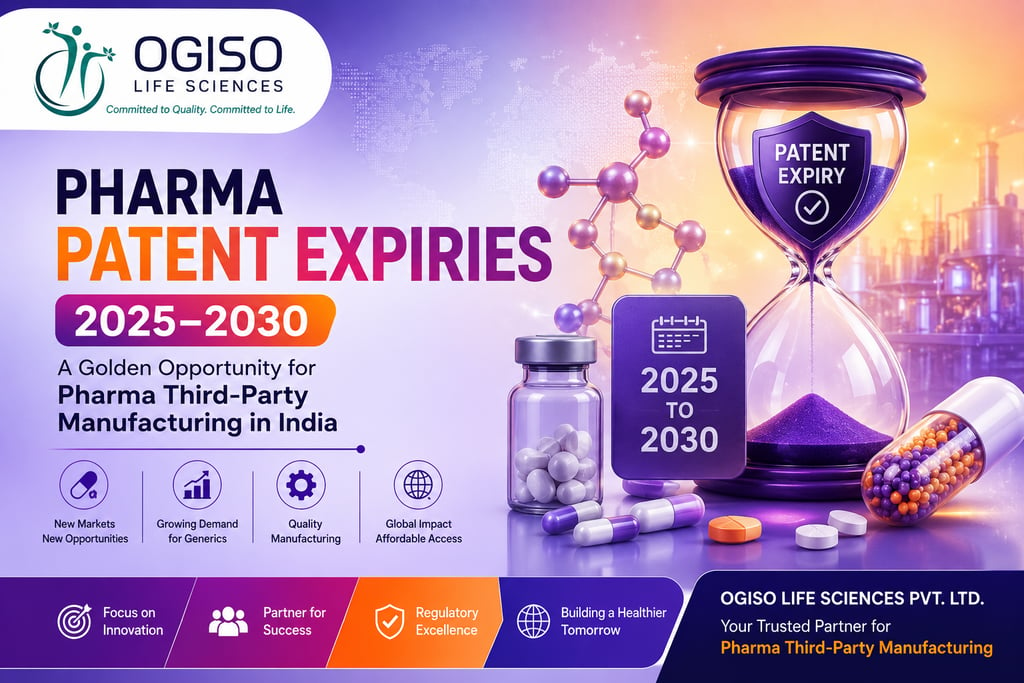
Pharma Patent Expiries (2025–2030): How Indian Pharma Third-Party Manufacturing Companies Can Benefit
The global pharmaceutical industry is entering one of its biggest transformation phases in recent history. Between 2025 and 2030, patents protecting many blockbuster medicines are expected to expire, creating opportunities for generic and biosimilar manufacturers worldwide. Industry estimates suggest this "patent cliff" affects medicines representing well over $100 billion in annual sales, with Indian pharmaceutical companies expected to capture a meaningful share of the opportunity. (LinkedIn)
For businesses involved in pharma third-party manufacturing, this is more than a regulatory event—it is a strategic opportunity to expand product portfolios, develop affordable medicines, and enter new domestic and international markets.
At Ogiso Life Sciences Pvt. Ltd., we believe that understanding these market changes helps pharmaceutical companies prepare for long-term growth while remaining compliant with applicable intellectual property and regulatory requirements.
What Is a Pharma Patent?
A pharmaceutical patent gives the innovator company exclusive rights to manufacture and market a medicine for a limited period, generally up to 20 years from the filing date, subject to applicable laws and regulatory exclusivities.
During the patent period:
Generic manufacturers cannot commercially market the patented invention without authorization.
The innovator company recovers its research and development investment.
Competition is limited.
Once patent protection expires (or where it no longer applies in a particular jurisdiction), other eligible manufacturers may develop generic or biosimilar versions in accordance with local laws and regulatory approvals.
What Is the "Patent Cliff"?
The patent cliff refers to the period when several high-selling medicines lose patent protection within a relatively short time.
As patents expire:
Generic competition increases.
Medicine prices usually decline.
Healthcare systems gain access to more affordable treatment options.
Pharmaceutical manufacturers gain opportunities to develop equivalent products where legally permitted.
This period between 2025 and 2030 is expected to be one of the largest patent-expiry cycles in the pharmaceutical industry. (LinkedIn)
Why Is This Important for India?
India is widely recognized as one of the world's largest suppliers of generic medicines.
Its strengths include:
WHO-GMP manufacturing facilities
Large-scale pharmaceutical production
Cost-efficient manufacturing
Strong formulation development expertise
Global regulatory experience
Because of these capabilities, Indian pharmaceutical manufacturers are well positioned to participate in opportunities created by patent expiries, subject to patent status and regulatory requirements in each market. (LinkedIn)
Major Drug Categories Seeing Patent Expiries
According to industry analyses, significant patent expiries during this period include medicines used for:
Oncology (Cancer)
Diabetes
Cardiovascular diseases
Autoimmune disorders
Respiratory diseases
Ophthalmology
Osteoporosis
Examples discussed in industry reports include products such as Keytruda, Eliquis, Opdivo, Stelara, Entresto, Farxiga, Jardiance, Dupixent, Trulicity, and Enbrel. Actual market availability of generics or biosimilars depends on jurisdiction-specific patents, regulatory approvals, litigation, and exclusivity periods. (LinkedIn)
Opportunities for Pharma Third-Party Manufacturing Companies
The upcoming patent expiries can create opportunities for companies involved in pharma third-party manufacturing.
Potential areas include:
Expansion of Product Portfolio
Marketing companies may look for experienced manufacturing partners capable of developing new formulations after legal and regulatory pathways become available.
Growth in Generic Manufacturing
Demand for quality generic medicines is expected to increase across multiple therapeutic categories.
Biosimilar Development
Biologics losing exclusivity present opportunities for manufacturers with advanced technical capabilities and regulatory expertise.
Export Opportunities
Countries seeking affordable medicines may increase procurement from qualified Indian manufacturers.
Important Challenges to Remember
Patent expiry does not automatically mean immediate commercial manufacturing is possible everywhere.
Companies should evaluate:
Country-specific patent status
Secondary patents
Regulatory exclusivities
Freedom-to-operate assessments
Biosimilar approval requirements
Market authorization timelines
Professional intellectual property and regulatory advice remain essential before commercial planning. (LinkedIn)
How Pharma Marketing Companies Should Prepare
Businesses planning future product launches should:
Monitor upcoming patent expires.
Conduct patent due diligence.
Evaluate market demand.
Partner with experienced manufacturers.
Prepare regulatory documentation early.
Plan commercial strategies well in advance.
Why Choosing the Right Pharma Third-Party Manufacturing Partner Matters
Selecting a manufacturing partner is about more than production capacity.
Look for a company that offers:
WHO-GMP compliant manufacturing
Robust quality assurance
Regulatory documentation support
Scalable manufacturing capabilities
Timely delivery
Transparent communication
These qualities help pharmaceutical brands bring products to market efficiently while maintaining quality standards.
How Ogiso Life Sciences Pvt. Ltd. Can Support Your Growth
Ogiso Life Sciences Pvt. Ltd. provides comprehensive pharma third-party manufacturing solutions for pharmaceutical companies across India.
Our capabilities include:
WHO-GMP compliant manufacturing
Tablets
Capsules
Syrups
Suspensions
Ointments
Nutraceutical formulations
Ayurvedic products
Private label manufacturing
Custom packaging and branding
Our experienced team focuses on quality, regulatory compliance, and long-term partnerships, helping clients build successful pharmaceutical brands.
Conclusion
The global patent-expiry cycle between 2025 and 2030 represents a significant milestone for the pharmaceutical industry. While opportunities for generic and biosimilar development are substantial, success depends on careful planning, regulatory compliance, and responsible intellectual property practices.
For companies seeking reliable pharma third-party manufacturing, partnering with an experienced manufacturer can help transform these market opportunities into sustainable business growth.
Frequently Asked Questions (FAQs)
What is a pharmaceutical patent?
A pharmaceutical patent provides exclusive commercial rights to an innovator for a limited period, subject to applicable laws.
Does patent expiry mean anyone can immediately manufacture the medicine?
Not necessarily. Market entry depends on jurisdiction-specific patents, regulatory approvals, litigation outcomes, and any remaining exclusivity protections.
Why are patent expiries important for Indian pharmaceutical companies?
They may create opportunities for developing generic medicines and biosimilars, provided all legal and regulatory requirements are satisfied.
How can pharma third-party manufacturing companies benefit?
They can support pharmaceutical brands with compliant product development, manufacturing, packaging, and commercialization after appropriate due diligence.
Useful External References
LinkedIn article by Dr. Rupal Rana Arya: https://www.linkedin.com/pulse/list-pharma-patents-expiring-2025-2030-dr-rupal-rana-arya-enzvf
Indian Patent Office: https://ipindia.gov.in
CDSCO: https://cdsco.gov.in
Department of Pharmaceuticals: https://pharma-dept.gov.in
World Intellectual Property Organization (WIPO): https://www.wipo.int
Disclaimer
This article is published for educational and informational purposes only. It is based on publicly available information, including industry reports and discussions regarding pharmaceutical patent expiries between 2025 and 2030. Patent status, regulatory exclusivities, litigation outcomes, and market availability vary by country and may change over time.
The mention of any pharmaceutical product, company, or brand name is solely for informational purposes and does not imply endorsement, affiliation, or authorization. Readers should verify the current patent position, regulatory approvals, and applicable laws before making any commercial, manufacturing, marketing, or investment decisions.
Ogiso Life Sciences Pvt. Ltd., its management, employees, and the author shall not be liable for any direct or indirect loss arising from reliance on the information presented in this article. Professional legal, intellectual property, and regulatory advice should always be obtained before initiating product development or commercialization.
Author
Mr. JP Sharma
22+ Years of Experience in Pharmaceutical Manufacturing and Trading
Ogiso Lifesciences Pvt. Ltd.
© 2026 Ogiso Lifesciences Pvt. Ltd. | Third Party Pharma Manufacturing Company | Contract Manufacturing Company in India | All Rights Reserved.
Sitemap
Global Sourcing
ogisolifesciences@gmail.com
+91 9258152671
G,116 Riico Industrial Area Growth Center Dholpur Rajasthan- 328001
© 2026 Ogiso Lifesciences-WHO-GMP Certified third-party manufacturing Company.
ZERO-COMPROMISE COMPLIANCE