Leading Pharma Third Party Manufacturer

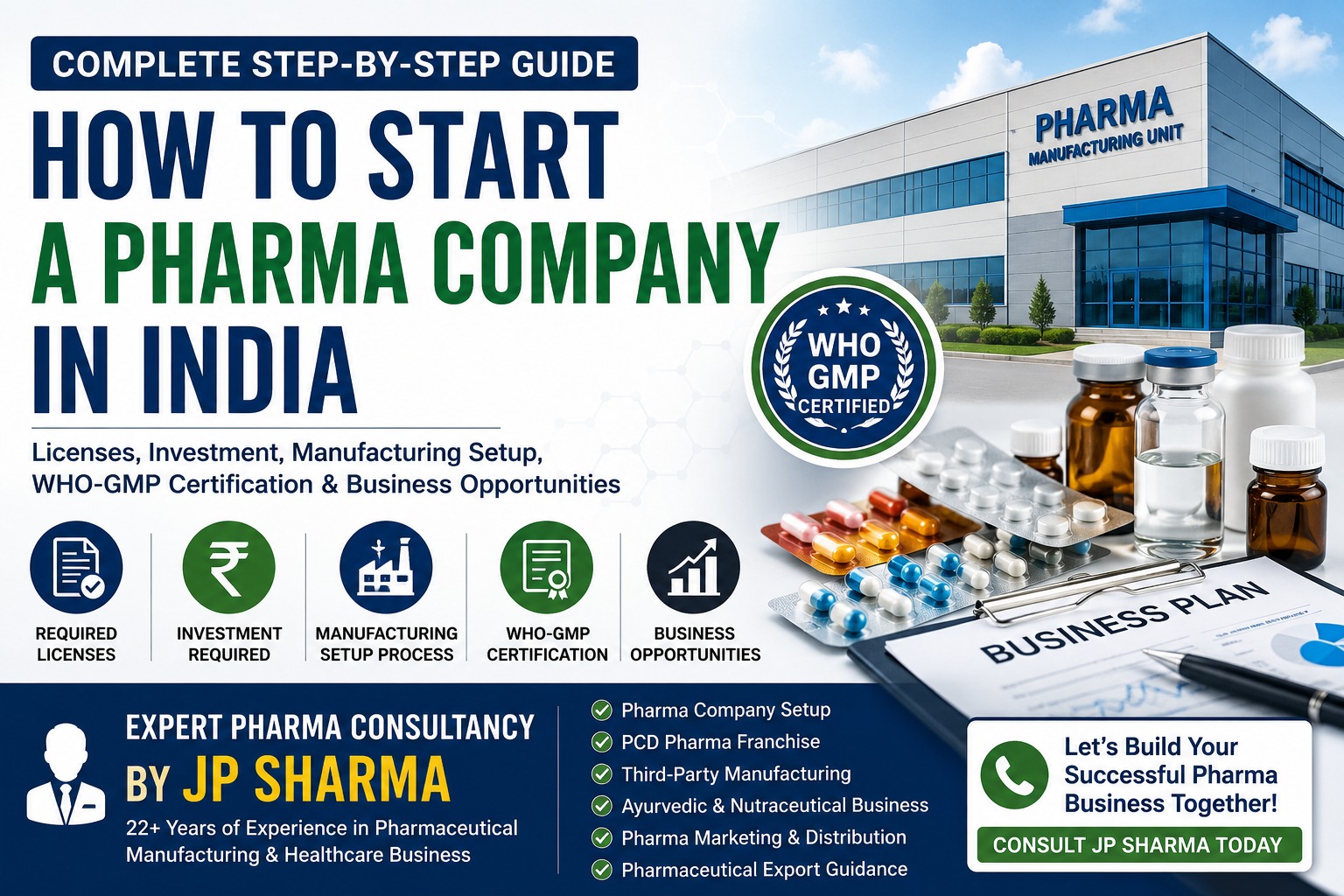
How to Start a Pharma Company in India: Complete Guide for Entrepreneurs (2026)
Learn how to start a pharma company in India, required licenses, investment, WHO-GMP certification, manufacturing setup process, and pharmaceutical business opportunities.
PHARMACEUTICAL BUSINESS
jp sharma
7/4/20268 min read
Overview of the Indian Pharmaceutical Industry
The Indian pharmaceutical industry stands as one of the most significant and rapidly growing sectors in the country. As of 2023, India ranks as the third-largest producer of pharmaceuticals by volume and is also known for its large generic drug market. This industry has played a critical role in supplying affordable medicines not only within India but also to many countries around the world, boosting its position in the global market.
As per recent statistics, the Indian pharmaceutical market is projected to reach approximately USD 65 billion by 2024. Major players in this field include companies like Sun Pharmaceutical Industries, Dr. Reddy's Laboratories, and Cipla, which have been pivotal in pushing India’s pharmaceutical exports. Moreover, the growth drivers such as favorable government policies, increasing healthcare demands, and advancements in technology continue to enhance the sector's potential.
The industry exhibits a robust Research and Development (R&D) landscape, with many Indian firms investing substantially to innovate and develop new drugs and therapies. This commitment not only strengthens their market position but also contributes to global health advancements. Moreover, the increasing trend towards personalized medicine and biological products presents an exciting opportunity for new entrants to explore niche segments within the pharmaceutical landscape.
The growth prospects appear promising, fueled by the rising aging population, increased prevalence of chronic diseases, and the sustained investment in healthcare infrastructure. Entrepreneurs looking to enter the pharmaceutical sector can find lucrative avenues in generic drugs, over-the-counter (OTC) products, and healthcare services, among others. The Indian pharmaceutical industry's significance, not only domestically but on a global scale, offers aspiring entrepreneurs a favorable environment to establish and expand their ventures.
Business Models in the Pharmaceutical Sector
The pharmaceutical industry in India offers diverse business models that cater to different market needs and entrepreneurial goals. Understanding these models is crucial for aspiring entrepreneurs looking to establish their pharma companies. Each model has its own set of advantages, challenges, and potential profit margins.
One common model is contract manufacturing, where a pharma company produces pharmaceutical products for other businesses under their brand name. This model allows companies to reduce capital expenditure on infrastructure and machinery, while also benefiting from the expertise of established manufacturers. However, reliance on third-party manufacturers can lead to quality control issues and might impact brand reputation.
Another viable option is PCD (Propaganda Cum Distribution) franchise. In this model, a company grants rights to a franchisee to sell its products in a designated territory. This method is particularly attractive due to low investment costs and the ability to penetrate local markets efficiently. Nevertheless, franchisees may face challenges related to competition and market saturation.
Trading is also a prevalent business model. Companies that opt for trading typically engage in the wholesale distribution of drugs without manufacturing them. This path allows for quick returns and generally lower operational risks, but it often comes with lower margins compared to manufacturing.
Retail pharmacy represents another important avenue. Owning a retail pharmacy enables entrepreneurs to directly interact with consumers and understand market demands. While this model allows for immediate cash flow and customer engagement, the investment in inventory and competition from online platforms can pose significant challenges.
Online sales have gained traction, especially post-pandemic. E-commerce platforms enable pharmacies to reach a larger audience, leading to potentially higher profit margins. However, regulatory compliance and logistics management for timely delivery are critical factors that must be addressed.
In conclusion, each of these business models presents unique opportunities and certain challenges, requiring careful consideration based on market conditions, capital availability, and personal business goals. Entrepreneurs must assess their capabilities and the market landscape before deciding the most suitable path for their pharmaceutical venture.
Legal Requirements: Company Registration and Licenses
Starting a pharmaceutical company in India involves navigating a complex landscape of legal requirements, particularly concerning company registration and obtaining the necessary licenses. The initial step is to formally register the business, which can be done through various structures such as a sole proprietorship, partnership, limited liability partnership (LLP), or a private limited company. Depending on the chosen structure, the documentation and registration process may differ. One must ensure the name of the company is unique and complies with the guidelines set by the Ministry of Corporate Affairs (MCA).
Once the company is registered, one of the most crucial licenses required to operate in the pharmaceutical sector in India is the drug license. This license validates the company’s capability to manufacture and sell drugs and is issued by the Central Drugs Standard Control Organization (CDSCO) or the respective State Drug Standard Control Authority (SDSCA). To obtain this license, the company should meet specific requirements, including maintaining quality standards and ensuring the availability of properly equipped facilities. Additionally, companies involved in the import/export of pharmaceutical products must also obtain an Import License from the CDSCO.
It is also essential to have other certifications such as Good Manufacturing Practices (GMP) certification, which affirms that products are consistently produced and controlled according to quality standards. Furthermore, companies must adhere to various other regulations and obtain necessary approvals, which may include conducting clinical trials, registration of new drugs, and complying with labeling and advertising regulations as prescribed by the Drugs and Cosmetics Act, 1940. Therefore, thorough research and guidance from legal experts are advisable to ensure compliance with all laws and regulations before starting operations in the dynamic Indian pharmaceutical market.
Comparison of Manufacturing vs Third-Party Manufacturing
The decision to establish a pharma company in India often requires entrepreneurs to choose between in-house manufacturing and third-party manufacturing. Each option presents unique implications in terms of costs, quality control, scalability, and production flexibility.
In-house manufacturing entails significant initial capital investments. Entrepreneurs must consider costs associated with infrastructure, equipment, staffing, and regulatory compliance. These expenses can be quite substantial, particularly for small to medium enterprises. However, having complete control over the manufacturing process can be a considerable advantage. This control ensures stringent quality assurance measures are adhered to, minimizing risks related to product recalls and ensuring that all products meet regulatory standards. Furthermore, in-house capabilities allow for better management of proprietary formulations and innovations, aiding in maintaining a competitive edge in the market.
On the other hand, third-party manufacturing comes with its own set of advantages, particularly appealing for startups or those looking to minimize upfront investment. This approach enables companies to utilize existing facilities and expertise of contract manufacturers. By outsourcing production, companies can significantly reduce initial costs related to setting up manufacturing plants and acquiring necessary equipment. Additionally, it allows greater flexibility in scaling production in response to market demand without the burden of investing in physical assets. However, the trade-off lies in the potential loss of direct control over product quality and product innovation which can be critical in the highly regulated pharmaceutical industry.
The choice between in-house manufacturing and third-party manufacturing greatly hinges on individual business priorities. Factors such as budget constraints, desired control over manufacturing processes, and future scalability should drive this decision-making. By weighing these factors carefully, entrepreneurs can devise a strategy aligned with their overarching business goals.
Marketing Strategies for Pharma Companies
Marketing is a critical aspect for pharmaceutical companies looking to establish a firm foothold in the industry. Effective marketing strategies not only enhance visibility but also play a significant role in giving a competitive edge. Both traditional and digital marketing approaches are essential for reaching diverse consumer segments.
Traditional marketing methods, such as print advertising, television campaigns, and direct mail, can help in imparting product information to pharmacists, healthcare providers, and consumers. Attending and sponsoring medical conferences can also bolster networking opportunities, attracting potential clients and consumers alike. Crafting informative brochures and engaging in public relations campaigns aids in explaining the unique benefits of products.
With the rise of technology, digital marketing has become paramount for pharmaceutical companies. Utilizing platforms such as social media, search engine optimization (SEO), and online advertising can significantly enhance brand awareness. Social media channels allow direct engagement with healthcare professionals and patients, creating a community around specific health concerns. Online educational content establishes authority in the field and is an effective way of presenting complex information in an understandable format.
Branding techniques must be at the forefront of any marketing strategy. A strong brand reputation can enhance trust and reliability in the products offered. Companies should invest in quality client feedback and testimonials, which can be shared through various channels. This increases transparency and demonstrates a commitment to customer satisfaction.
Moreover, exploring export opportunities can further increase profitability. Pharmaceutical companies should research international markets carefully, paying close attention to regulations and demand within those regions. Engaging with local distributors can help facilitate entry into new markets, expanding the reach and impact of their products.
In summary, a balanced approach integrating both traditional and digital marketing techniques, combined with a strong branding strategy and export exploration, is essential for pharmaceutical companies to thrive in the dynamic and competitive landscape of the industry.
Common Mistakes and Expert Tips for Success
Starting a pharmaceutical company in India presents a unique set of challenges for entrepreneurs. Many new entrants into the pharma sector often overlook critical aspects that can lead to business failure. One common mistake is inadequate market research. It is essential to thoroughly understand the target market, competitors, and regulatory environment before launching a product. Failing to do this can result in wasted resources and lost opportunities.
Another frequent pitfall is neglecting the importance of compliance with legal and regulatory standards. The pharmaceutical industry is highly regulated, and any lapses can lead to severe consequences, including fines and product recalls. Entrepreneurs must be well-versed in the Drug and Cosmetic Act, as well as the guidelines set forth by the Central Drugs Standard Control Organization (CDSCO). Engaging legal experts in the early stages can mitigate these risks.
Additionally, building an effective supply chain is critical. Many new pharma companies underestimate the complexity of logistics, which can impact product availability and ultimately sales. It is advisable to establish reliable partnerships with suppliers and distributors, ensuring that products reach the market efficiently.
On the other hand, there are several expert tips that can enhance the likelihood of success. First, networking within the pharmaceutical industry is vital. Joining industry associations, attending conferences, and building relationships with other professionals can provide valuable insights and resources.
Furthermore, continuous learning and adaptation are crucial. The healthcare landscape is constantly evolving, influenced by technological advancements and changing consumer needs. Entrepreneurs should invest in ongoing education and be open to innovation and change. This adaptability can help maintain competitiveness in the marketplace.
By being aware of these common mistakes and implementing best practices, pharmaceutical entrepreneurs can navigate the complexities of starting and running a successful business in India.
Conclusion and Call to Action
Starting a pharmaceutical company in India is a complex but rewarding venture. Throughout this guide, we have covered essential steps such as market research, business planning, compliance with regulations, and establishing manufacturing capabilities. Each of these aspects is critical in ensuring that your new pharmaceutical enterprise not only complies with the stringent policies set forth by Indian authorities but also meets the needs of the market effectively. By understanding the intricacies of the pharma landscape, entrepreneurs can position themselves for success in this competitive industry.
The importance of selecting the right manufacturing partner cannot be overstated. Collaborating with a reputable third-party manufacturer can significantly streamline operations and reduce overhead costs. Additionally, personalized pharmaceutical solutions can give your products a competitive edge, ensuring that they address specific consumer needs. Engaging professionals who specialize in this sector can provide insights and support that are invaluable to new enterprises.
As you embark on this exciting journey, remember that having a strategic plan and access to robust resources is key. Building a network of contacts within the industry, seeking mentorship, and engaging with experienced organizations like Ogiso Life Sciences Pvt. Ltd. can enhance your prospects. We invite you to connect with us for personalized consultation and to explore our comprehensive range of third-party manufacturing services. Together, we can turn your aspirations into a thriving pharmaceutical reality.
We hope this guide has equipped you with the knowledge necessary to navigate the challenging waters of establishing a pharmaceutical business in India. May your entrepreneurial pursuits lead to innovative solutions that contribute to the health and well-being of communities across the nation.
ABOUT THE AUTHOR
JP Sharma
Pharmaceutical Entrepreneur | Industry Consultant
JP Sharma has more than 22 years of experience in pharmaceutical manufacturing, trading, business development, and healthcare entrepreneurship. He provides consultancy for pharmaceutical startups, PCD pharma franchise businesses, third-party manufacturing, Ayurvedic products, nutraceuticals, distribution networks, and export-oriented pharmaceutical ventures.
DISCLAIMER
This article is for educational and informational purposes only. Readers should consult qualified professionals and regulatory authorities before making business or compliance-related decisions.
Ogiso Lifesciences Pvt. Ltd.
© 2026 Ogiso Lifesciences Pvt. Ltd. | Third Party Pharma Manufacturing Company | Contract Manufacturing Company in India | All Rights Reserved.
Sitemap
Global Sourcing
ogisolifesciences@gmail.com
+91 9258152671
G,116 Riico Industrial Area Growth Center Dholpur Rajasthan- 328001
© 2026 Ogiso Lifesciences-WHO-GMP Certified third-party manufacturing Company.
ZERO-COMPROMISE COMPLIANCE